
Hand-stitched cotton, dyed to the saturation of paint. We built a frame to match.
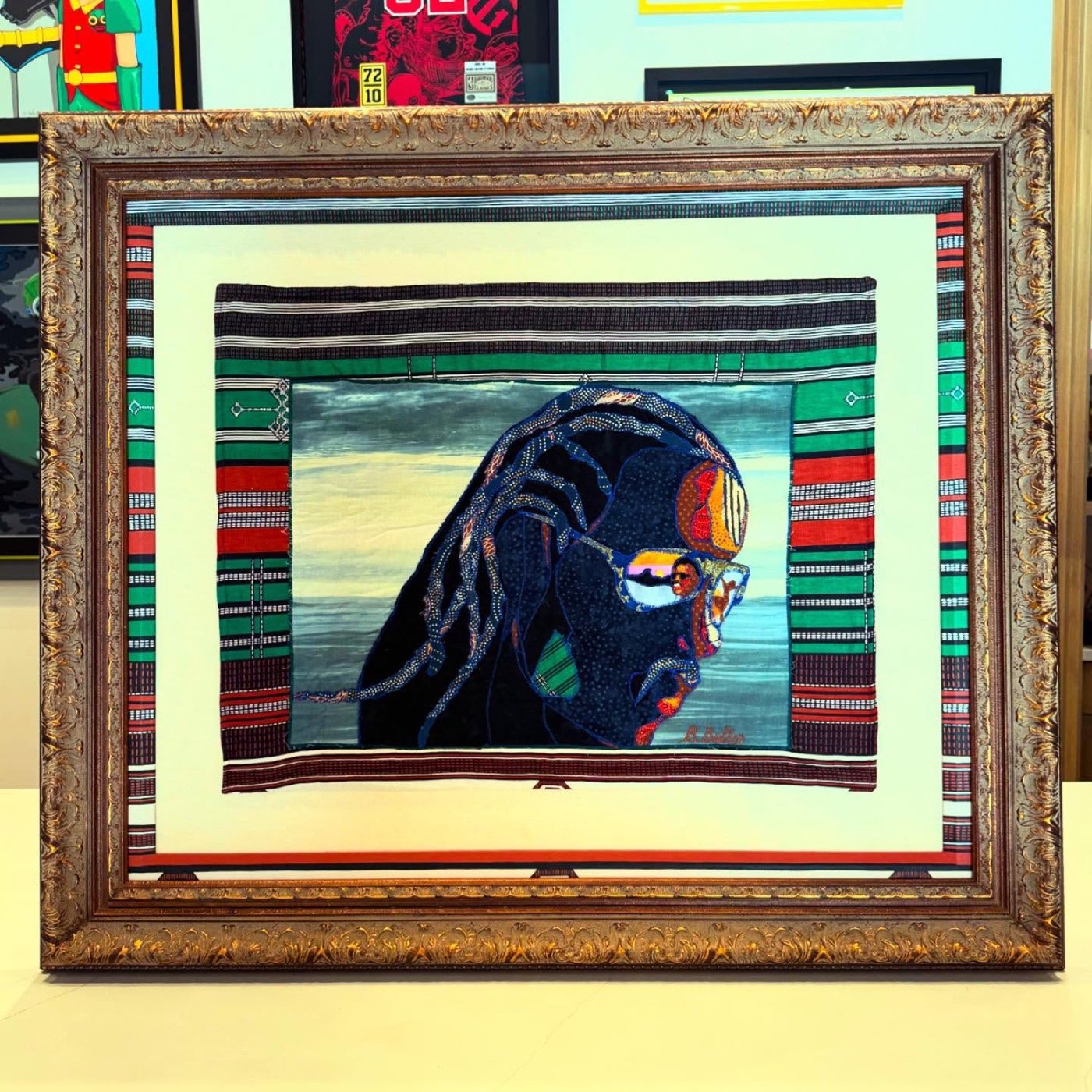
A few weeks back, a hand-stitched quilt portrait of Stevie Wonder came through our door. The artist was Bisa Butler, whose quilted portraits hang at the Smithsonian, the Art Institute of Chicago, and the Pérez Art Museum Miami. The owner had brought it in for framing, and asked one question: what does this kind of work deserve?
Hers are not quilts in the parlor sense. Each one is a portrait built from layered, hand-stitched African textiles, kente cloth, wax prints, dyed cotton, saturated with color so deliberate that the cloth reads, at first, like paint. Step closer and the stitching insists otherwise. The tension between the two is the work.
So when a Butler quilt asks to be framed, it is asking two questions at once. How do you protect cotton? And how do you frame what painters used to call portraiture, when the medium is something a museum spent a century declining to take seriously?
About the artist, and what arrived on our bench.
What we built, on the bench.
- LinerHand-painted linen, mixed in our shop to a warm off-white that picked up the muted tones in the quilt's background, pale yellow, faded indigo, the hint of green in Stevie's collar.
- MouldingOrnate, gilded, deep-profile. The kind of frame you would expect on a nineteenth-century portrait.
- GlazingUV-filtering museum acrylic. No reflection on the textiles.
- MountInert acid-free linen-wrapped panel. Stitched along the top edge so the quilt hangs by its own weight.
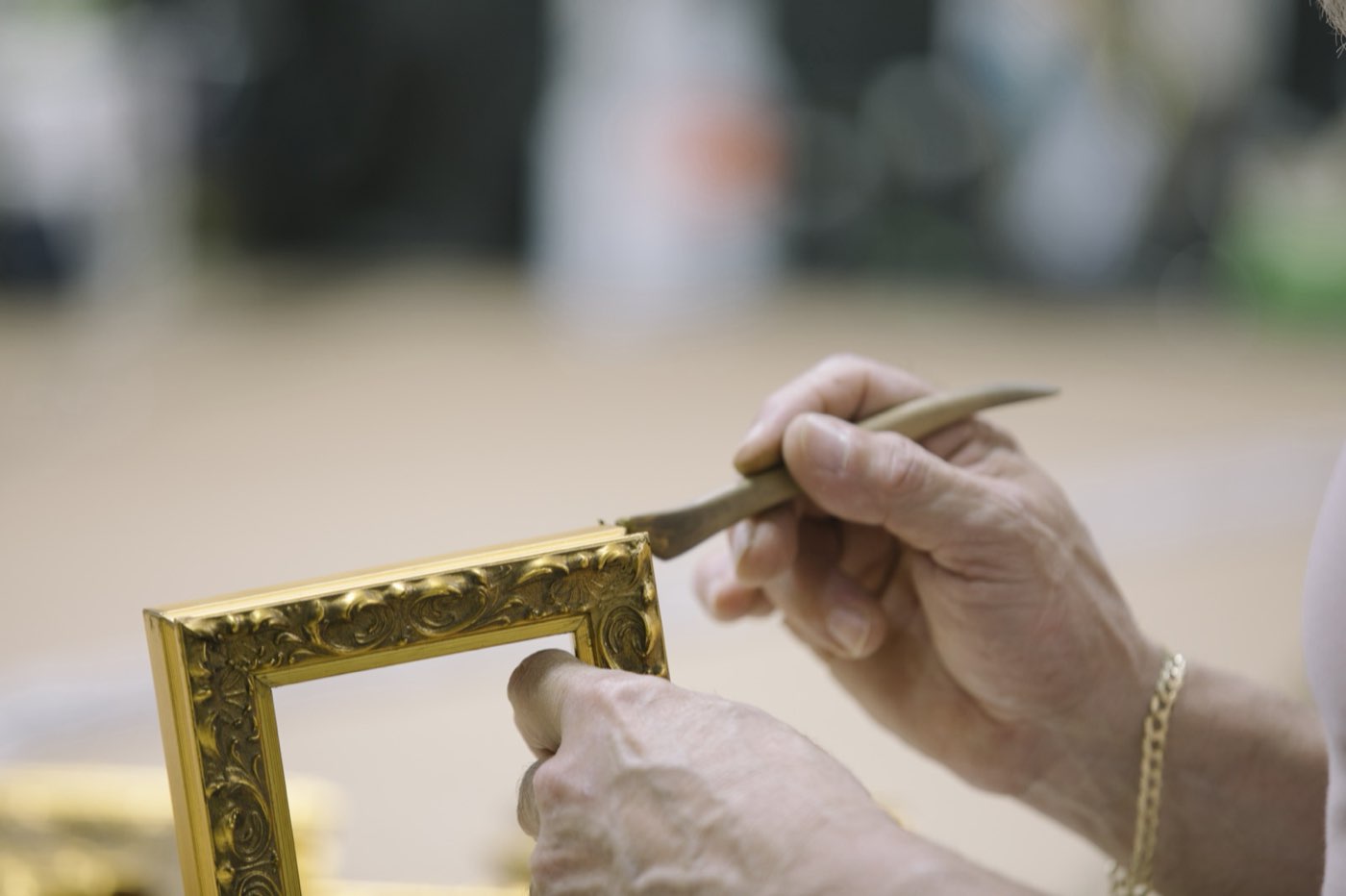
A liner is the slim insert between the mat and the moulding. We mix and brush ours in the shop. The brushwork stays in the finish, and the color is matched to the artwork rather than picked from a fan deck.
This particular quilt has the muted background of a portrait studio, the figure in foreground, dyed cotton in dozens of skin tones the artist mixed by hand, set against a wash of greys and faded earth tones. The hand-painted liner sits inside the gilt moulding and reads like a tonal extension of the quilt's own backdrop. Step back six feet and the seam between artwork and frame becomes hard to find.
You decide what the artwork is asking the room to do, and then you build the frame to amplify that request.
From the workshop bench
A note on profile.
When the artwork itself is built from cotton, soft, domestic, historically tied to handcraft, the frame has to insist on the formality the artwork is borrowing. Otherwise the quilt reads as decorative, which it is not. A heavy, ornate, unmistakably museum-trained moulding insists.
What carries over to other quilts.
Bisa Butler's quilt was asking to be taken as seriously as the painted portrait of any musician of Stevie's stature. We agreed.